
Paint correction: what it is, what it costs, and when you need it
Paint correction removes swirls and scratches by machine-polishing the clear coat. It costs $300 to $1,500+. Here's what it is and when you need it.
On this page
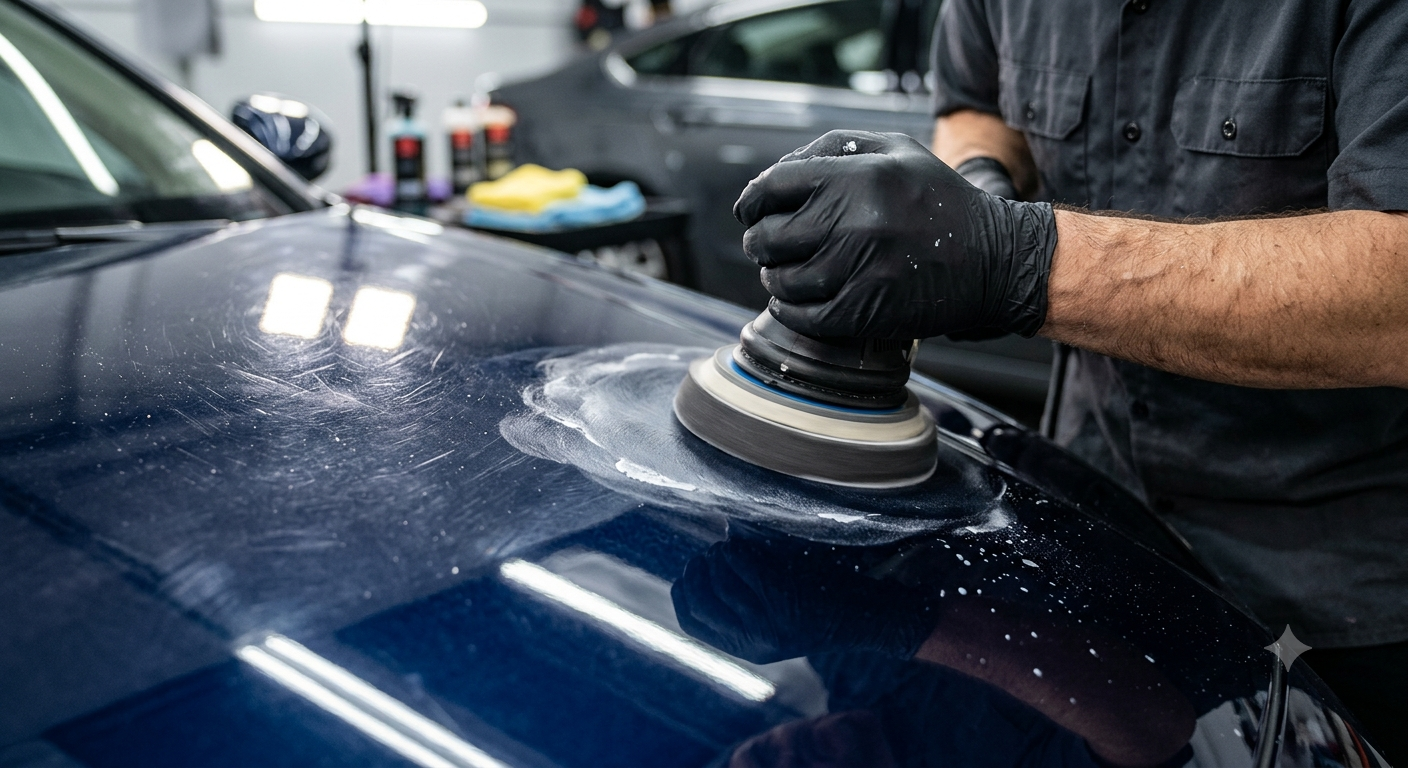
Download the appPaint correction is the process of machine-polishing your car's clear coat to remove swirl marks, light scratches, and oxidation, restoring the paint's true gloss. It typically costs $300 to $1,500+ depending on how bad the paint is and how many stages of polishing it needs. It's a restorative service, not routine maintenance, and it's the step that makes a car look genuinely new again.
Here's what it actually is, what drives the price, and when you need it versus when a simpler service will do.
What is paint correction?
Over time, paint picks up fine defects: swirl marks from improper washing, light scratches, water spots, and a hazy dullness from oxidation. These sit in the clear coat, the protective layer over the color. Paint correction uses a polishing machine and progressively finer compounds to level that clear coat microscopically, removing the defects instead of just hiding them.
This is the key difference from a wax or glaze, which temporarily fill and mask defects. Correction actually removes them. That's why it takes hours of skilled labor and why it costs what it does.
How much does paint correction cost?
Price is driven mostly by how many polishing stages the paint needs. More defects mean more passes, which means more time:
| Level | What it does | Typical price |
|---|---|---|
| Single-stage (one-step) | Removes light swirls, boosts gloss. ~70-80% correction. | $300 to $700 |
| Two-stage | Compound + polish for deeper defects. ~85-95% correction. | $600 to $1,200 |
| Multi-stage / show finish | Multiple passes for near-flawless paint. | $1,000 to $2,500+ |
Paint correction pricing by stage
Vehicle size, paint hardness, and how neglected the finish is all move these numbers. A quote always follows an in-person paint assessment.
When do you actually need paint correction?
You need it when there are real defects in the clear coat that bother you, or before applying a long-term protective layer. Specifically:
- Visible swirls and scratches. If you see spiderweb swirls under sunlight or light scratches across panels, correction is what removes them.
- Before a ceramic coating. This is the big one. A ceramic coating locks in whatever's underneath, so you correct first or you seal the swirls in for years.
- Restoring an older or neglected car. Correction can dramatically revive dull, oxidized paint that's never been properly cared for.
- Before selling a higher-value car. Flawless paint photographs and shows better, which can matter on a private sale of a nicer vehicle.
You don't always need full correction. If your paint is basically clean and you just want more shine, a one-step polish or even a good wax may be enough. A honest detailer will tell you the minimum that gets the result you want.
When you can skip it
Correction isn't always the right spend. Skip it (or choose a lighter service) if your paint is already in good shape, you're not planning to coat the car, or you're about to sell to a dealer or cash buyer where cosmetics barely move the price. Removing clear coat is also not infinite, aggressive correction thins it over time, so there's no reason to correct paint that doesn't need it.
Frequently asked questions
How much does paint correction cost?
Paint correction typically costs $300 to $1,500 or more. A single-stage correction runs $300 to $700, two-stage $600 to $1,200, and multi-stage show finishes $1,000 to $2,500+. Price depends on the number of polishing stages, vehicle size, and paint condition.
What's the difference between paint correction and waxing?
Paint correction machine-polishes the clear coat to permanently remove swirls, light scratches, and oxidation. A wax or glaze only temporarily fills and hides those defects. Correction removes them; wax masks them.
Do I need paint correction?
You need it if you have visible swirls or scratches you want gone, or before applying a ceramic coating (which would otherwise seal defects in). It's also used to restore neglected paint. You can skip it if the paint is already clean and you're not coating the car.
Is paint correction permanent?
Results are permanent in that the defects are physically removed, not hidden. But new swirls can form from future washing, which is why many owners follow correction with a ceramic coating to protect the corrected finish.
Get an honest paint assessment.
Not sure if your paint needs correction or just a polish? FOAM connects you with detailers who'll assess it honestly and recommend the right level, not the most expensive one. Compare portfolios and book.
Download the appKyle is the founder of FOAM. He works with FOAM's Atlanta detailers to keep every guide grounded in how the work actually gets done.